Beyond the Smart Ring: Can Remote Photoplethysmography Make Health Monitoring Wearable-Free?
BY Ima Appweb ON September 18, 2026
The next health device may not be a device you wear
The consumer health industry has spent years making physiological monitoring smaller, smarter and easier to use.
We moved from clinical equipment to home devices.
From chest straps to watches.
From watches to smart rings.
The underlying objective remained remarkably consistent:
Collect meaningful physiological data continuously without making the user think about it.
Smart rings are a particularly elegant example of this philosophy. A tiny device worn on the finger can combine optical PPG, temperature sensing and motion sensing to collect physiological information throughout the day and night. Ultrahuman's Ring AIR, for example, uses an infrared PPG sensor, red and green LEDs, temperature sensing and a 6-axis motion sensor.
But there is another path.
Instead of making the wearable smaller, what if we remove the wearable?
That is where remote photoplethysmography (rPPG) becomes fascinating.
What is rPPG?
Photoplethysmography, or PPG, is an optical technique used to detect changes associated with blood-volume dynamics.
A conventional PPG system generally shines light onto or through tissue and uses a photodetector to capture changes in the returned or transmitted light. PPG is widely used in devices such as pulse oximeters and wearables.
rPPG — remote photoplethysmography — changes the sensing geometry.
Instead of placing the optical sensor against the skin, a camera records video.
Very small changes in reflected light from the skin can contain a physiological signal related to blood pulsation.
The signal is extremely subtle.
It is affected by motion, lighting, camera characteristics and other sources of noise.
That means rPPG is not simply:
“Point a camera at someone's face and count pixels.”
It is a signal-processing and computer-vision problem.
Modern approaches combine facial-region detection, temporal signal processing, motion handling, normalization and increasingly sophisticated machine-learning methods.
Recent research describes rPPG as capable of extracting heart-rate and other physiological information from facial video, while emphasizing the remaining challenges around robustness and real-world deployment.
PPG and rPPG are related — but not the same product
It is useful to understand the difference.
Conventional PPG
LED
 ↓
Skin
 ↓
Photodetector
 ↓
PPG signal
 ↓
Physiological measurement
The sensor physically interacts with the body.
Remote PPG
Light
 ↓
Skin
 ↓
Camera
 ↓
Video
 ↓
Signal extraction
 ↓
rPPG
 ↓
Physiological measurement
The camera observes the physiological signal remotely.
The physiological phenomenon is related.
The product architecture is completely different.
Why this matters
The difference sounds technical.
It is actually a product-design difference.
A wearable requires:
A device + attachment + battery + charging + fit + comfort + maintenance.
A camera-based system potentially requires:
A camera + computation + software.
That doesn't mean rPPG is automatically better.
A ring has major advantages.
It is close to the blood-flow source.
It can operate continuously.
It is relatively private compared with a room camera.
It can collect data while the user moves around.
rPPG has its own challenges.
Motion is difficult.
Lighting is difficult.
Camera positioning matters.
Signal quality can vary.
Privacy becomes a major consideration.
So the question isn't:
“Will rPPG replace smart rings?”
The more interesting question is:
“What products become possible when physiological sensing no longer requires physical contact?”
The first opportunity: smartphones
The most obvious form factor is already everywhere.
The smartphone.
A user opens an application.
The front camera captures a short video.
The system identifies suitable facial regions.
Signal-processing algorithms isolate the physiological component.
The system estimates validated metrics.
This creates a very different experience from a wearable.
There is no hardware purchase.
No sizing.
No charging.
No device to remember.
This could make intermittent physiological assessment dramatically more accessible.
Research has already explored smartphone and consumer-camera-based rPPG, although real-world robustness remains a major engineering consideration.
But smartphones are only the beginning
If the technology works through a camera, the camera doesn't have to be a smartphone.
This creates a much larger design space.
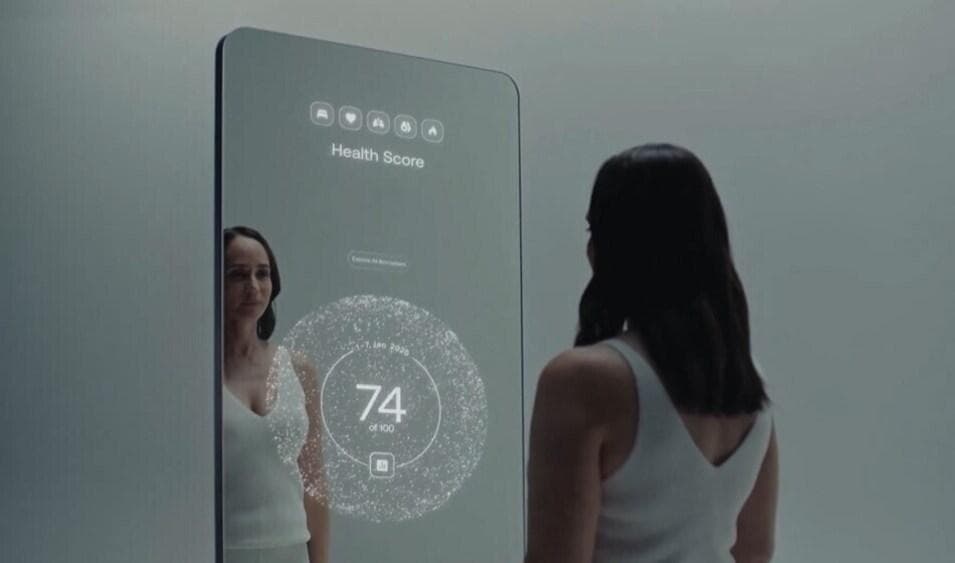
1. Smart mirrors
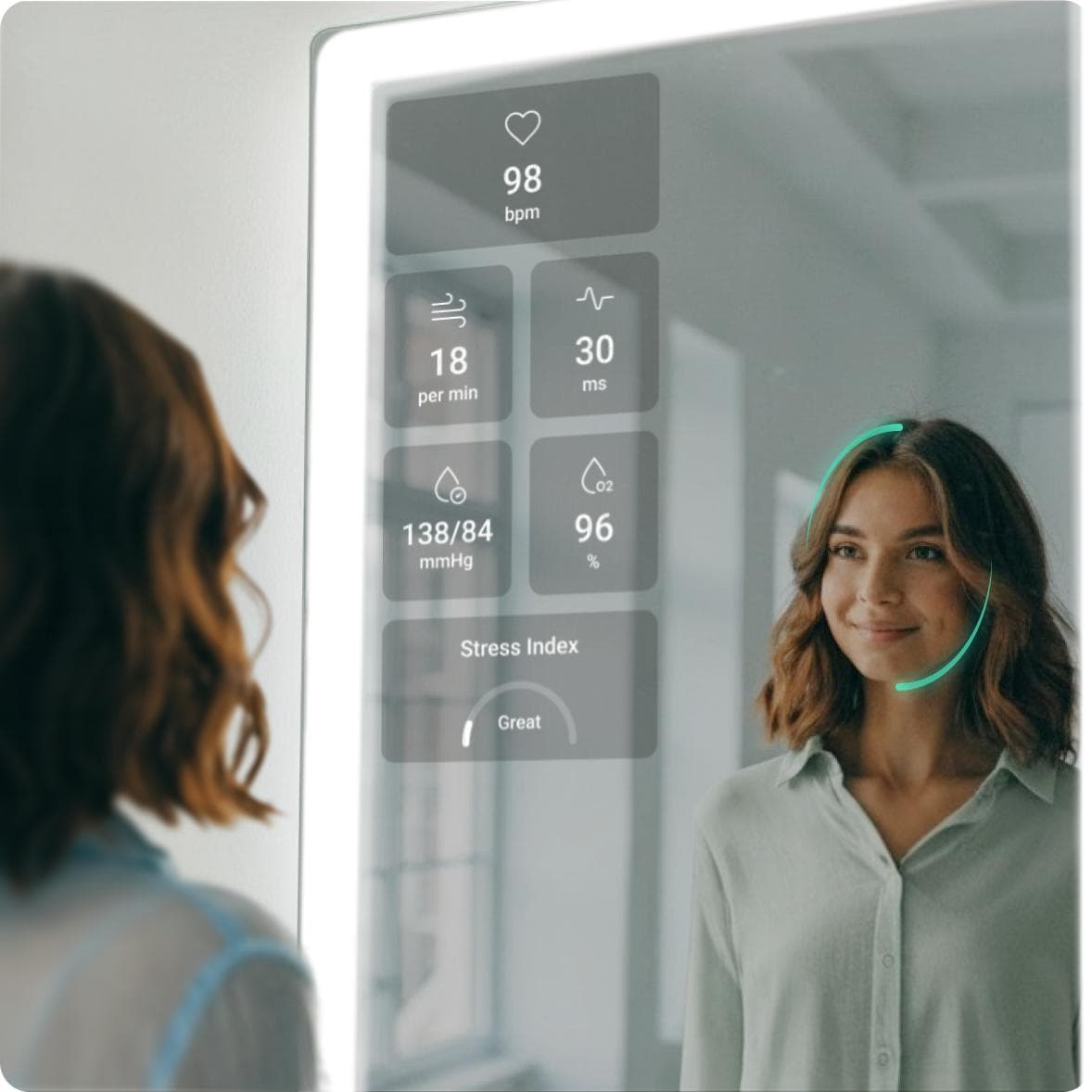
A bathroom mirror already occupies a predictable position.
The user naturally looks toward it.
A camera integrated into the mirror could potentially perform a short physiological assessment.
The mirror could become:
A display + camera + physiological sensor + AI interface.
2. Bedside monitoring
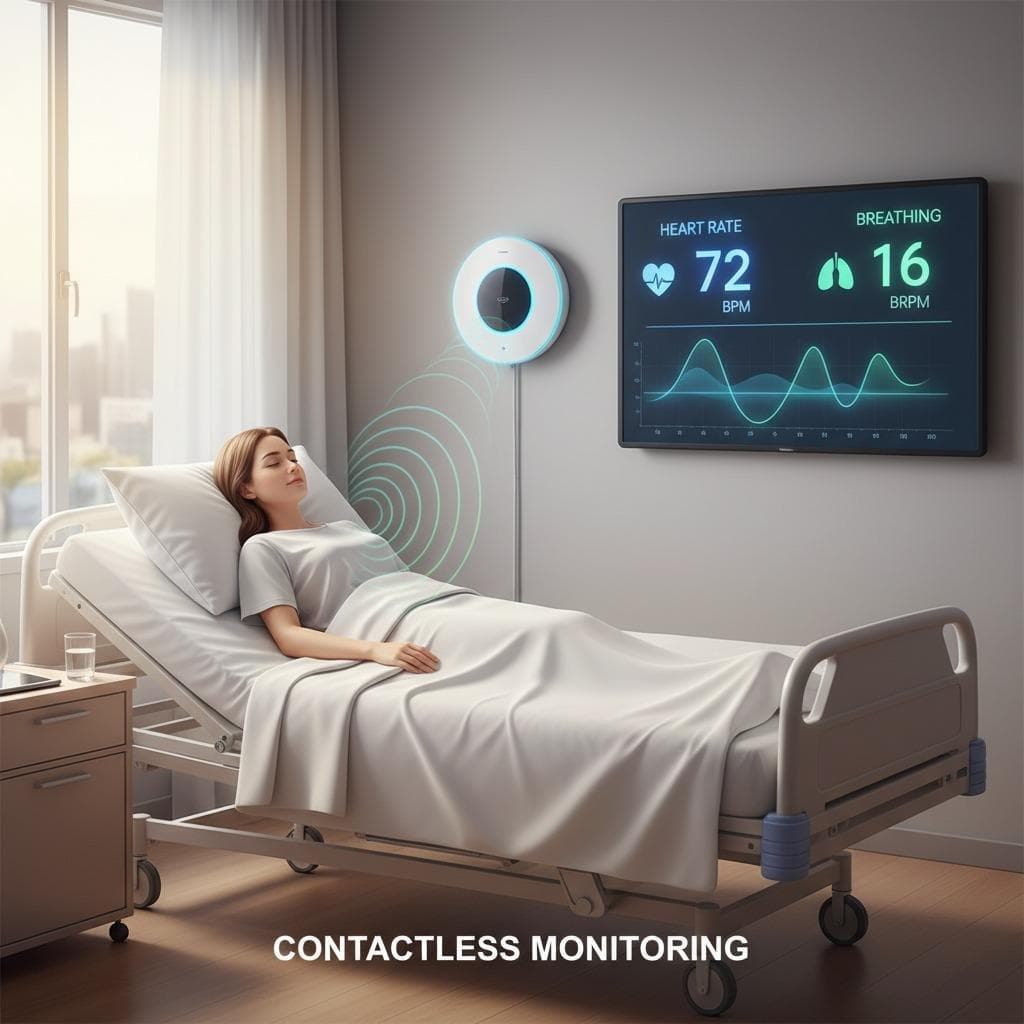
Sleep is one of the most compelling environments for contactless sensing.
A bedside device could potentially monitor physiological signals without requiring the user to wear something.
The technology could combine:
- rPPG
- computer vision
- movement analysis
- environmental sensors
- potentially other non-contact sensing modalities
The objective wouldn't simply be to produce a heart-rate number.
It could build a picture of the person's physiological patterns during sleep.
However, nighttime monitoring introduces additional technical challenges such as low illumination, occlusion and movement. This is precisely where controlled hardware and multimodal sensing may become important.
3. Elder-care environments
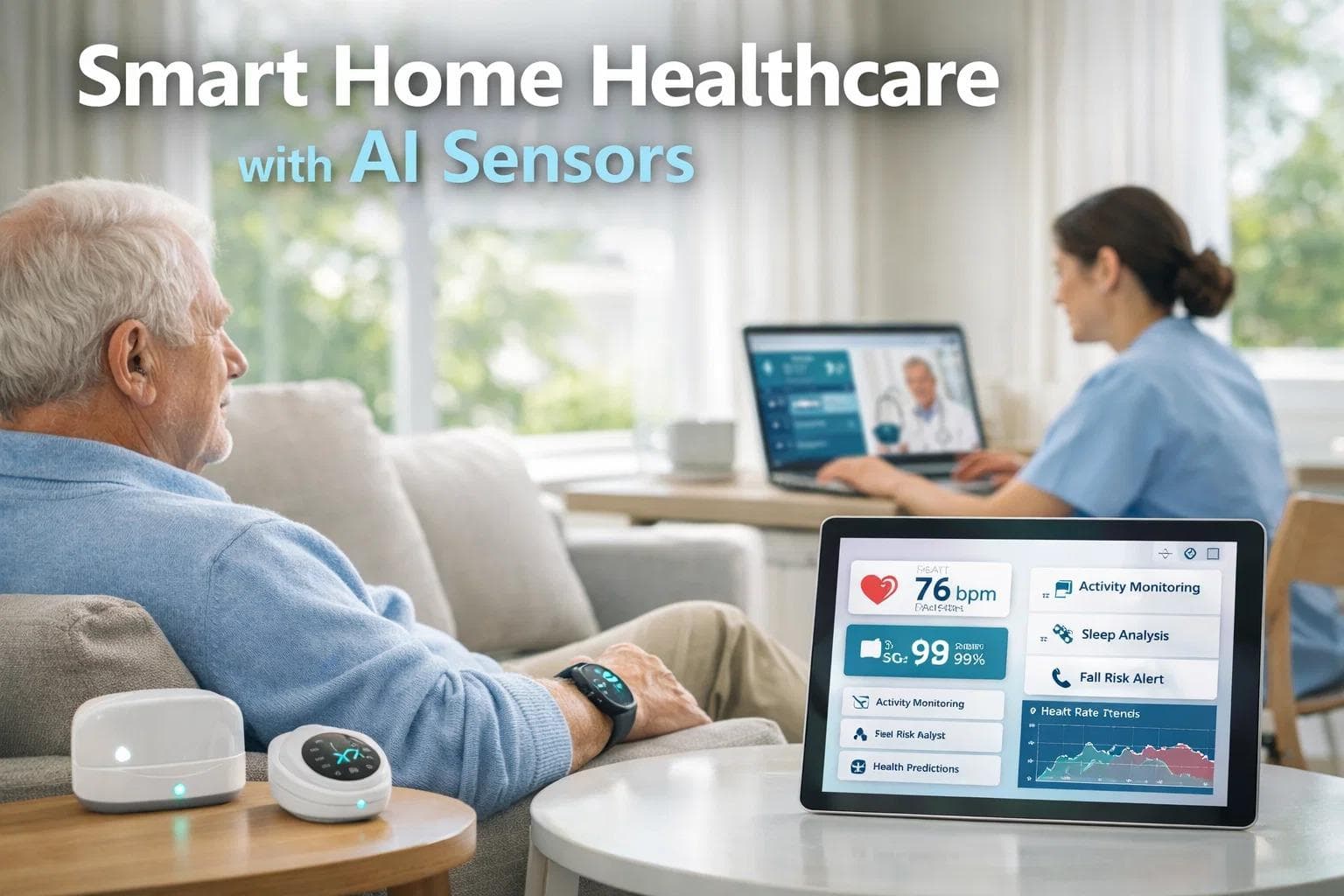
Consider a person living independently.
The system doesn't ask them to operate a device.
Instead, it observes permitted environmental signals and looks for meaningful deviations from their normal patterns.
The technology could potentially combine:
rPPG + activity recognition + gait + posture + fall detection + environmental data.
The value isn't any single measurement.
The value is:
Detecting meaningful changes without requiring the person to remember to measure themselves.
This is where physiological sensing starts becoming part of ambient intelligence.
4. Automotive
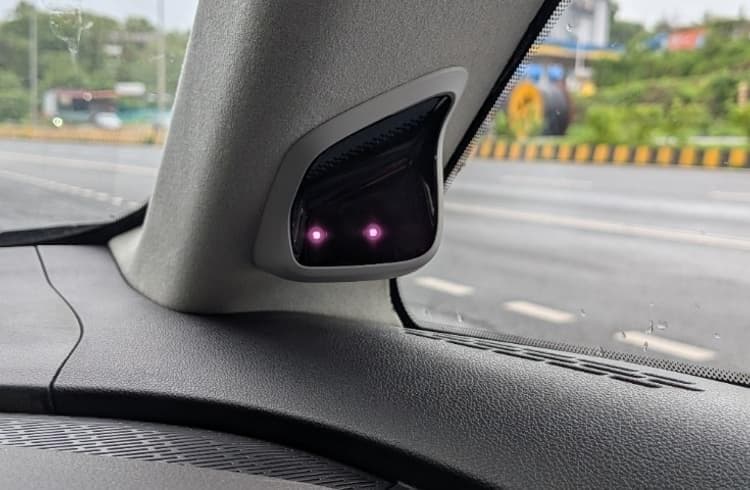
Cars are becoming increasingly aware of their occupants.
Driver-facing cameras can already support computer-vision applications.
Adding physiological sensing creates another potential layer:
visual perception + physiological perception.
A future vehicle could potentially combine:
- driver gaze
- blink behaviour
- head pose
- posture
- heart-rate-related signals
- respiration
- steering behaviour
- vehicle telemetry
The purpose isn't necessarily to diagnose health conditions.
It could be about understanding the human-machine relationship.
This makes automotive one of the most interesting long-term areas for rPPG.
5. Healthcare and telemedicine
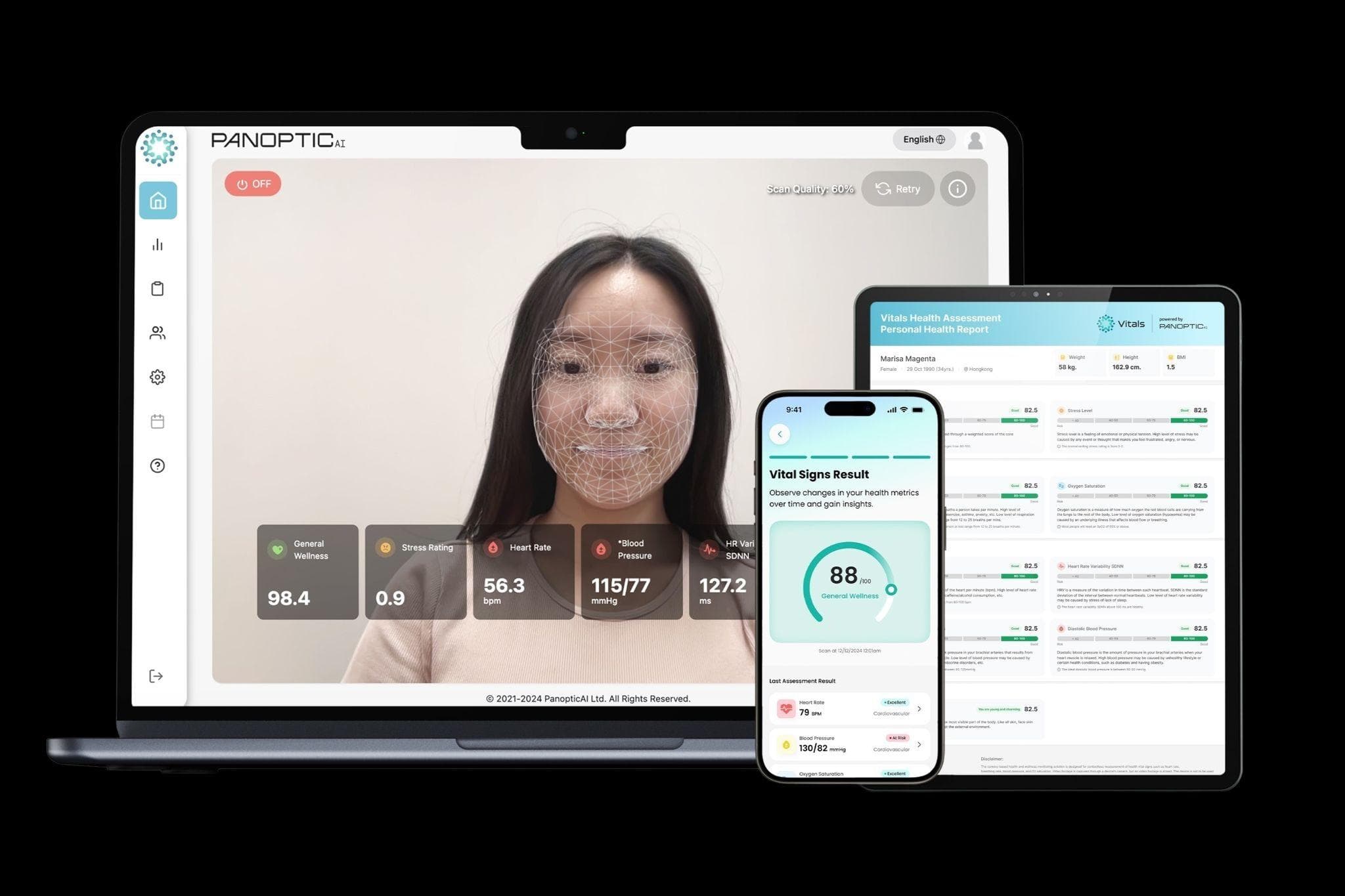
Healthcare is perhaps the most obvious application — and one of the most difficult.
Contactless monitoring could potentially reduce the need for some physical sensors in certain workflows.
A clinician could potentially obtain physiological measurements through a camera-based system.
Remote consultations could potentially incorporate physiological signals.
Hospital environments could potentially use contactless monitoring in appropriate settings.
But healthcare changes the standard of evidence.
A technology that works well as a wellness feature is not automatically a medical device.
Clinical validation, intended-use definition, regulatory requirements and appropriate reference measurements become critical.
A systematic review of clinical applications of contactless PPG found promising evidence, particularly for heart-rate estimation, but also emphasized the need for further clinical research.
That distinction matters.
The real opportunity may not be a product
This is the part that interests me most.
What if rPPG becomes an infrastructure layer?
Think about the evolution of computing.
The camera started as a device for taking photographs.
Then it became:
- computer vision input
- biometric input
- augmented-reality input
- authentication input
- machine-learning input
Could the next evolution be:
Physiological input?
A camera could become a general-purpose sensor for certain physiological signals.
That creates an opportunity for an rPPG platform.
An rPPG platform
Imagine an SDK/API that allows developers to integrate camera-based physiological sensing into their applications.
Conceptually:
Camera
   ↓
Face / ROI detection
   ↓
Signal extraction
   ↓
Motion & lighting compensation
   ↓
Signal quality assessment
   ↓
Physiological estimation
   ↓
Developer API
Applications could then build their own experiences.
For example:
Telemedicine
Camera → physiological data → clinician interface
Fitness
Camera → physiological data → workout/recovery experience
Hospitality
Camera → optional wellness assessment → guest experience
Automotive
Camera → physiological signal → driver monitoring system
Research
Camera → physiological signal → research dataset
The underlying sensing layer remains the same.
The hardest problem isn't the demo
A demo can be impressive.
Someone sits in front of a webcam.
A number appears:
Heart rate: 72 BPM
The demo works.
But that isn't enough to build a company.
The hard questions begin afterward.
How does it perform when the person moves?
What happens under different lighting?
How does it perform across different cameras?
How does skin tone affect the signal?
How much video is required?
What happens with facial hair, glasses or partial occlusion?
How do compression and frame rate affect the measurement?
How do we detect when the signal isn't trustworthy?
How does performance change outside a laboratory?
These are not secondary questions.
They are the product.
Recent research specifically highlights motion, illumination, frame rate, compression, region-of-interest selection and dataset limitations as major considerations in the path toward robust rPPG deployment.
The importance of a Signal Quality Score
One concept I believe deserves much more attention is measurement confidence.
A physiological system should not always return a number.
Sometimes it should say:
Signal quality insufficient.
That is a feature, not a failure.
Imagine an API returning:
Heart Rate: 71 BPM
Signal Quality: 96%
Measurement Duration: 30 sec
Confidence: High
versus:
Heart Rate: 89 BPM
Signal Quality: 38%
Confidence: Low
The second system may be more trustworthy because it knows when it doesn't know.
That principle becomes essential if rPPG is going to move from demonstrations into serious products.
From measurements to personal baselines
The ultimate value may not come from a single measurement.
Consider two people:
Person A:
HR = 60
Person B:
HR = 60
The number is identical.
But their normal baselines could be completely different.
A more useful system could eventually ask:
How does today's measurement compare with this person's normal physiological pattern?
That requires longitudinal data.
And longitudinal data creates a completely different product category.
Instead of:
Measurement
we get:
Personal physiological intelligence.
The long-term vision
Imagine a world where cameras don't just see us.
They can, under appropriate consent and technical conditions, understand certain physiological signals.
Your:
phone
could perform a quick check.
Your:
mirror
could provide a morning assessment.
Your:
bedside device
could monitor selected nighttime signals.
Your:
car
could understand driver physiology.
Your:
health application
could use camera-based sensing as another input.
The technology becomes invisible.
That is what makes it interesting.
From wearable intelligence to ambient intelligence
The evolution might look like this:
First
Clinical sensors
Highly accurate, specialized, inconvenient for everyday use.
Then
Wearables
Continuous, personal and increasingly sophisticated.
Next
Camera-based sensing
Contactless physiological measurement.
Eventually
Ambient physiological intelligence
Physiological sensing becomes part of the environments where people already live, work, travel and communicate.
That is the hypothesis.
Not a prediction.
Not a promise.
A technology thesis worth testing.
What we are exploring at IMA
At IMA, we have been exploring rPPG and computer-vision-based physiological sensing.
The immediate objective isn't to announce a finished medical product.
It is to answer fundamental engineering questions:
How reliable can camera-based physiological sensing become?
How robust can it be across real-world conditions?
What should be measured confidently today?
What requires more research?
Which hardware environments can make the signal substantially better?
And ultimately:
Can we turn rPPG from an interesting computer-vision capability into a dependable sensing platform?
That is the opportunity I find exciting.
The bigger idea
The most important innovation may not be a smaller sensor.
It may be removing the sensor from the body altogether.
Smart rings, watches and other wearables have shown us that people value continuous physiological intelligence.
The next question is whether some of that intelligence can become available without asking people to wear another device.
Maybe the future isn't:
Wear your health sensor.
Maybe it is:
Your environment becomes the sensor.
And if that future is possible, rPPG could be one of the technologies that helps build it.