
The Strategic Equation: Why Enterprises Spend—and How AI Solves, Simplifies, and Elevates
BY Ima Appweb ON August 11, 2026
The Strategic Equation: Why Enterprises Spend—and How AI Solves, Simplifies, and Elevates
The Strategic Equation: Why Enterprises Spend—and How AI Solves, Simplifies, and Elevates
Every capital expenditure in the enterprise sector boils down to a fundamental psychological reality: organizations do not buy software features; they buy solutions, convenience, and elevated customer experiences.
When enterprise buyers evaluate digital transformation partners—whether choosing between established consulting firms like Accenture, Deloitte Digital, or Capgemini, or evaluating specialized platforms—they weigh investments against three core commercial drivers:
-
Solutions that eliminate systemic pain and revenue leaks.
-
Convenience that removes operational friction and accelerates time-to-value.
-
Experiences that command brand equity and customer lifetime value.
The asIma™ AI Growth Platform from ImaAppweb was architected around these exact imperatives. Here is how modern enterprise leadership leverages intelligent automation across these three levers to capture market share, protect margins, and drive end-to-end business transformation.
Pillar 1: The Solution — Eliminating Systemic Pain and Revenue Leaks
Enterprise clients pay premium rates when an operational bottleneck threatens top-line growth or inflates bottom-line expenses. In high-stakes sectors like Healthcare, Real Estate, and Financial Services, inefficient workflows, slow intake, and dropped inquiries result in massive revenue leakage.
                          [ Revenue Leakage Point ]
                                     │
     ┌───────────────────────────────┴───────────────────────────────┐
     ▼                                                               ▼
Healthcare: Uncaptured Intake Calls               Real Estate: High CAC & Delayed Lead Routing
     │                                                               │
     └───────────────────────────────┬───────────────────────────────┘
                                     ▼
                     [ asIma™ Intelligent Automation ]
                                     │
       ┌─────────────────────────────┴─────────────────────────────┐
       ▼                                                           ▼
Voice AI & Knowledge AI Deployment                         Automated CRM Routing
       │                                                           │
       └─────────────────────────────┬─────────────────────────────┘
                                     ▼
                 [ Measurable Outcome: Recovered Margin & Lower CAC ]
The Healthcare Challenge: High Intake Drop-Off
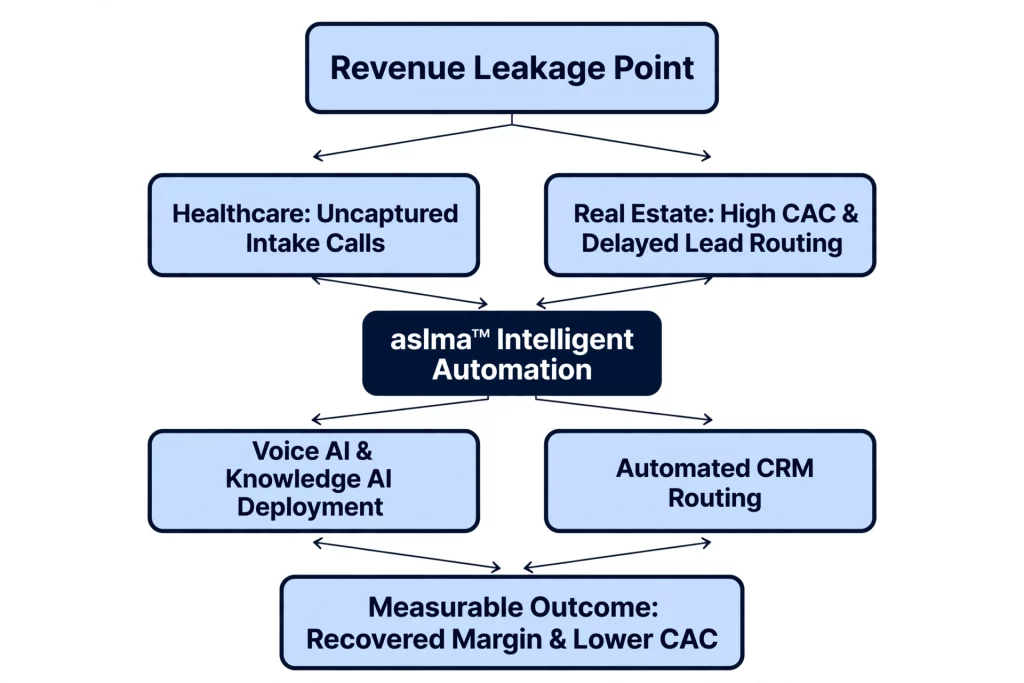
In primary care networks and specialized medical clinics across Tier 1 markets like the United States and Singapore, patient intake systems often struggle under heavy call volumes. Unanswered calls and delayed scheduling directly translate to lost patient lifetime value.
-
The Intelligent Automation Response: Deploying asIma™ Voice AI and Knowledge AI provides 24/7 autonomous intake, appointment orchestration, and triage support.
-
The Strategic Impact: Eliminates call drop-off rates and labor overload without expanding headcount, turning a traditional cost center into an optimized intake engine.
The Real Estate Challenge: Lead Acquisition Costs and Latency
With Customer Acquisition Costs (CAC) escalating in hyper-competitive luxury property markets like Dubai, Miami, and Riyadh, a delayed response to a high-intent buyer degrades lead conversion rates exponentially.
-
The Intelligent Automation Response: Integrating asIma™ WhatsApp AI paired with automated CRM workflows instantly qualifies incoming leads, answers property specifications via contextual knowledge engines, and routes high-value opportunities to human agents in real time.
-
The Strategic Impact: Direct reduction in CAC through automated lead conversion, protecting marketing spend and securing higher transaction velocity.
Pillar 2: Convenience — Frictionless Automation at Enterprise Scale
The largest enterprises in the world win by removing friction. In sectors like Hospitality, Travel, and Consumer Brands, operational complexity slows down execution and degrades the buyer journey. Enterprise technology must unify fragmented systems into a single, cohesive Customer Experience Platform.
+-----------------------------------------------------------------------+
|                   FRAGMENTED OPERATIONAL FRICTION                     |
|  Legacy Reservation Systems | Disparate Support Channels | Siloed Data  |
+-----------------------------------------------------------------------+
                                    │
                                    ▼
+-----------------------------------------------------------------------+
|                    asIma™ AI GROWTH PLATFORM                          |
|   WhatsApp AI + Reservation AI + Commerce AI + Analytics Engine       |
+-----------------------------------------------------------------------+
                                    │
                                    ▼
+-----------------------------------------------------------------------+
|                      UNIFIED ENTERPRISE VALUE                         |
|   Zero Wait Times | Frictionless Concierge | Real-Time Intelligence   |
+-----------------------------------------------------------------------+
Unifying the Hospitality & Travel Journey
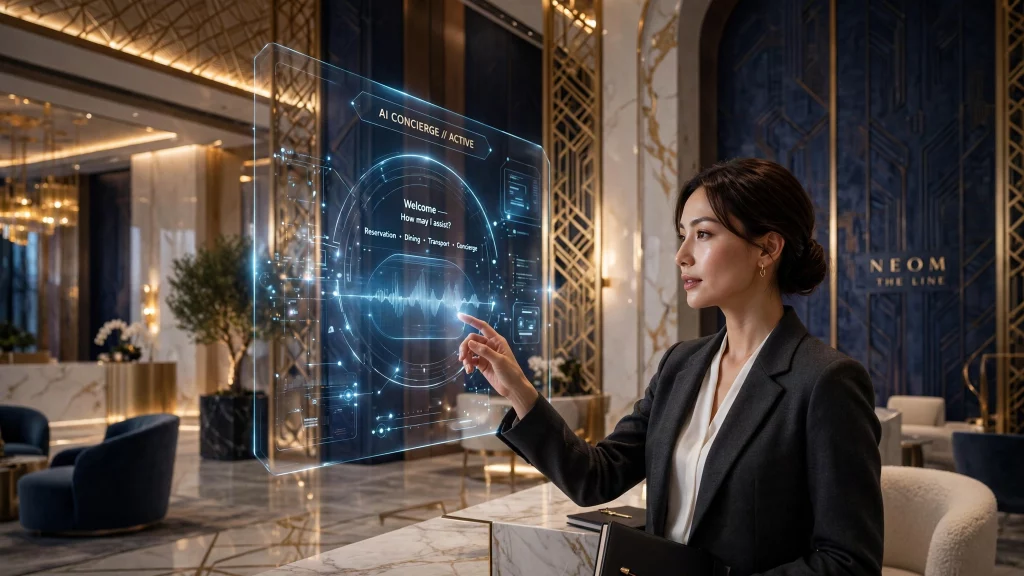
Across key travel hubs from Las Vegas to London and NEOM, guest satisfaction relies heavily on operational response times. Traditional guest services rely on fragmented channels—separate engines for booking, room service, concierge, and feedback.
-
The Enterprise Solution: Unifying guest interactions through asIma™ Reservation AI, WhatsApp AI, and Commerce AI.
-
Frictionless Execution: Guests manage bookings, order amenities, and request concierge services through instant, conversational interfaces without downloading separate applications or standing in line.
-
Operational Value: Consolidates disparate point solutions into a centralized Customer Intelligence Platform, optimizing staff productivity and delivering frictionless operational control.
Pillar 3: Experience — Driving Premium Differentiation & Brand Equity
Enterprises pay a premium for strategic consulting and technology integration because they realize that product parity exists in almost every industry. The remaining sustainable competitive advantage is the end-to-end customer experience.
       [ Legacy Interaction ]                  [ Intelligent Experience ]
                  │                                        │
     Transactional & Static Touchpoints      Hyper-Personalized & Context-Aware
                  │                                        │
                  ▼                                        ▼
      Commoditized Price Competition           Premium Valuation & LTV Growth
Elevating Luxury Brands and High-Touch Services
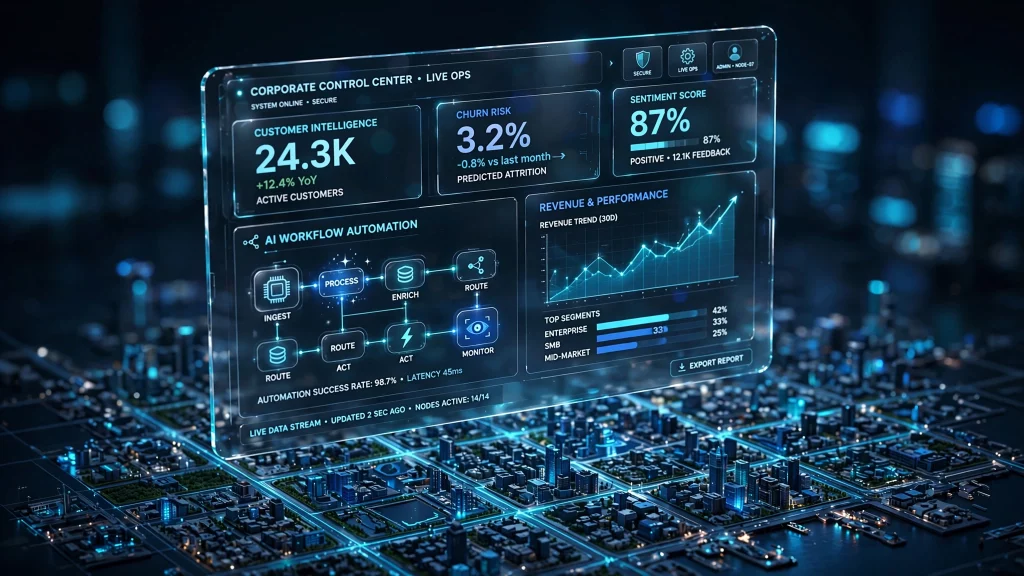
In luxury real estate, premium retail, and high-end hospitality markets across Dubai, Tokyo, and New York, brand equity is sustained through personalization and exclusivity.
-
The Customer Intelligence Advantage: Leveraging asIma™ Customer Intelligence Platform capabilities alongside Content AI and Chat AI, enterprises transform routine transactional touchpoints into tailored, context-aware interactions.
-
Context-Driven Engagement: Every client interaction builds upon historical preference data, behavioral insights, and predictive intent, ensuring that communication feels high-touch rather than automated.
+-----------------------------------------------------------------------+
|                   EXPERIENCE-DRIVEN VALUE CYCLE                       |
|                                                                       |
|   [ Contextual Data ] ──> [ Personalization ] ──> [ High Retention ]  |
|            ▲                                              │           |
|            └────────────────── [ Higher LTV ] ────────────┘           |
+-----------------------------------------------------------------------+
-
Strategic Outcome: Elevates customer perception, justifies premium pricing structures, and drives long-term Customer Lifetime Value (LTV) through sustained engagement.
The Strategic Path Forward
To achieve sustainable growth and lead business transformation initiatives globally, enterprise leaders must evaluate technology through these three core commercial lenses:
| Commercial Driver | Enterprise Objective | Key asIma™ Platform Drivers | Core Business Impact |
| Solution | Eliminate structural inefficiency & lost revenue | Voice AI, Knowledge AI, CRM | Reduced CAC & Lower Churn |
| Convenience | Remove friction across operations & guest channels | WhatsApp AI, Reservation AI, Workflow Automation | Higher Operational Velocity |
| Experience | Build sustainable brand equity & customer lifetime value | Customer Intelligence, Commerce AI, Analytics | Increased LTV & Retention |
By orchestrating Solution, Convenience, and Experience into a single cohesive strategy, organizations move beyond simple software adoption to drive long-term digital business transformation.
Frequently Asked Questions About Enterprises Spend